The Silicon Prairie
How data centers threaten land, communities, and the environment
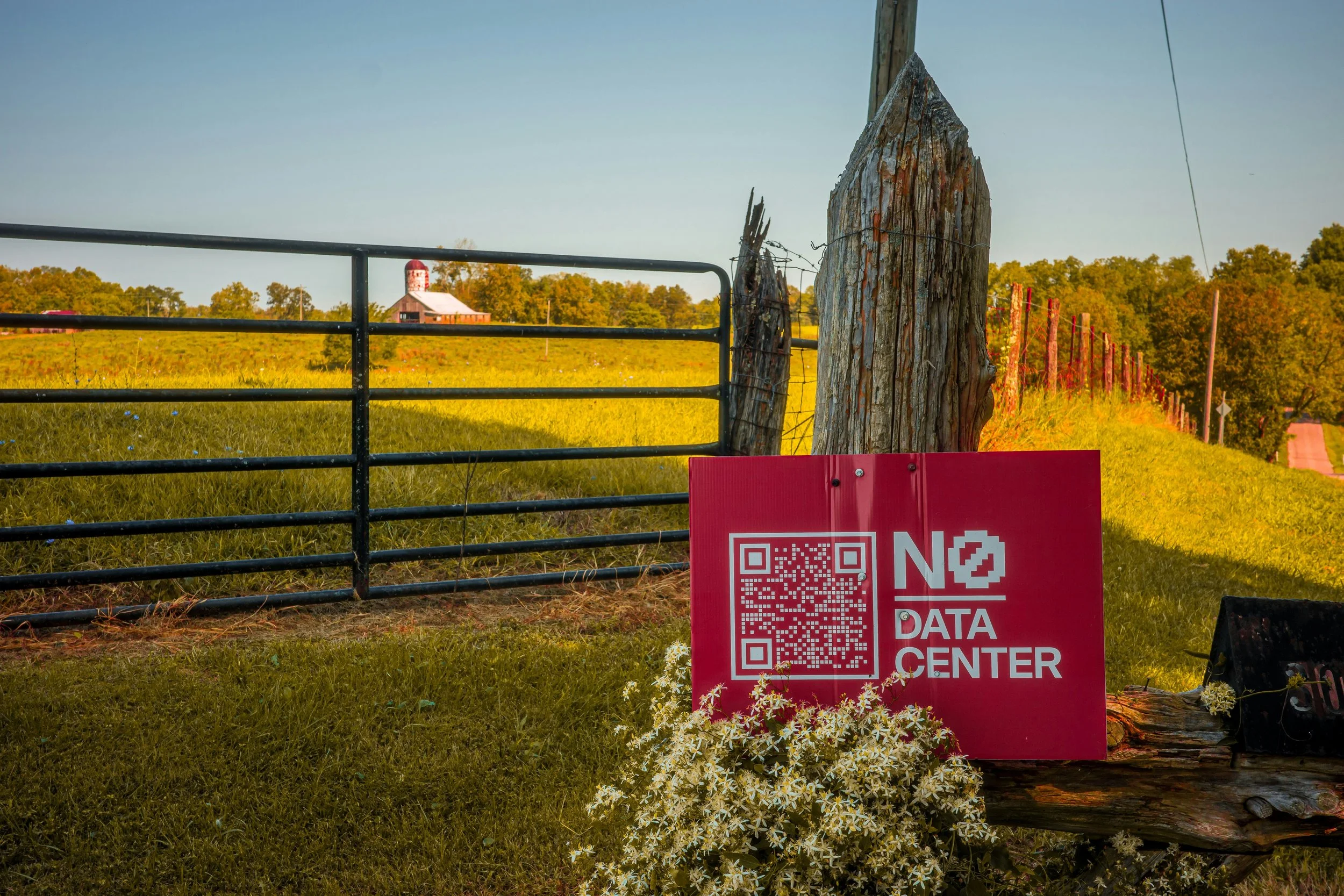
Image by Nils Huenerfuerst via Unsplash
The Never-Ending Rural Land Grab
As the AI industry grows, the need for computing power capable of supporting those applications has fueled an unprecedented surge in data center development. Per Our World in Data, money spent on building data centers in the US has grown 5-fold since late 2022 (November 2022 marks when ChatGPT was notably released by OpenAI).
In the early stages of data center development, urban areas became prime locations due to their superior network connectivity, existing power infrastructure, and close proximity to end-users. Location is particularly key for sectors such as healthcare and finance whose operations can’t absorb lag in performance. However, for generative AI models that are cloud-based, a different set of location factors applies. Rather than prioritizing locations that can deliver speed and proximity, cloud services can be delivered from afar. Therefore, places where power is cheap and land is abundant are preferred. Hence, rural communities.
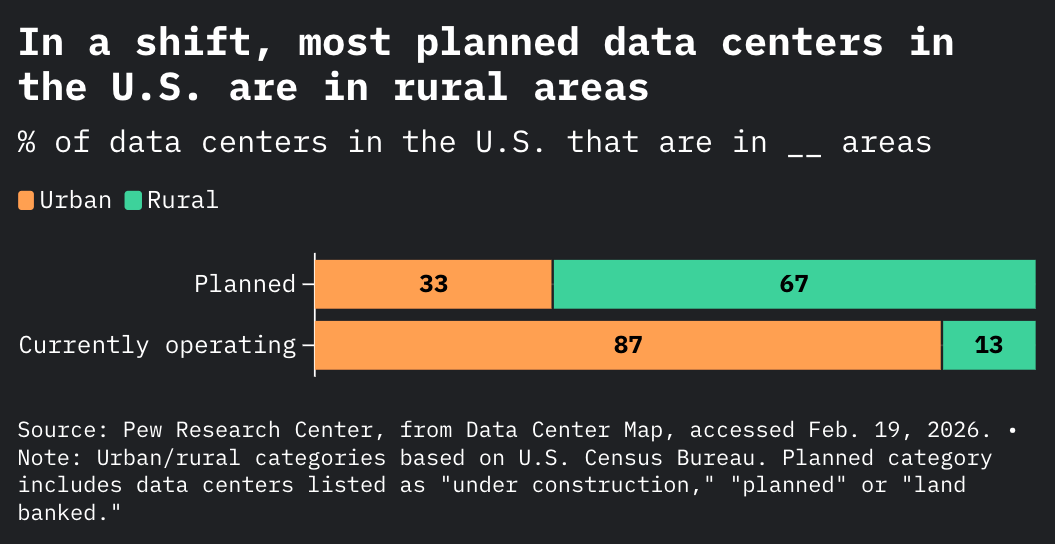
Thus far, the data doesn’t lie. According to the Pew Research Center, 67% of all planned data centers in the US will be located in rural areas. For farmers in these areas, this shift is concerning, as it eerily resembles the agricultural land grab where industrial-scale farms and corporate monopolies have squeezed small/family farms out of land and business.
In the case of data center development, farmers are facing the same dilemma: keep their land, but miss out on a big payday, OR reap the financial rewards, but give up a big part of their life. When you consider that most small farms do not make a profit from crop or livestock sales alone and often depend on off-farm income to help pay living expenses, it’s no surprise that developers are offering wildly inflated sale prices. In one recent example, a farmer in Kentucky received an offer to sell his land to data center developers for $8 million – 3,500% more than what he paid decades ago.
On paper, it might seem like a smart financial decision for farmers to sell their land, but in reality it’s not as simple as cashing in on a new opportunity. For a majority of farmers, their precious land is a source of livelihood and is foundational to their family and community history. As the old adage goes, there are some things in life that money just can’t buy – and for that Kentucky farmer, that proved to be true as he rejected the $8 million offer. But no matter what a farmer decides to do when presented with one of these offers, it’s clear that rural communities are being unfairly taken advantage of by Big Tech and their never-ending wallets.
How Data Centers Affect Communities
As data centers multiply, so do their impacts. Ranging from financial to environmental, communities are being impacted in various ways. What has become abundantly clear is that data centers require large amounts of energy to function. One study from Berkeley Labs found that data centers in the United States could represent up to 12% of all U.S. electricity consumption by 2028. For context, a typical AI-focused data center consumes as much annual electricity as 100,000 homes, but many of the larger ones now being built in rural communities are expected to consume up to 20 times that amount.
As energy demand soars and more data centers come online, there is concern among households about how these costs will be shared. While there are a lot of factors that contribute to rises in power bill costs, there’s evidence that the need to procure and build new energy infrastructure for data centers has already contributed to price increases in at least one region (the Mid-Atlantic). Other regions can expect to see the same if safeguards aren’t put in place by state governments.
In addition to financial impacts, the environmental impacts of AI have garnered a lot of attention. Data centers require huge amounts of water to keep servers cool enough to function. Mid-sized facilities can use up to 300,000 gallons of water a day, while large facilities can consume as much as 5 million gallons daily – comparable to what a small town uses. This massive demand is a pressing problem for communities already facing drought or depleting water supplies. Two-thirds of all data centers built or in development since 2022 are located in water-stressed areas like southern Arizona, the Colorado River Basin, and Texas.
Given their need for a constant and reliable power supply, data centers also often rely on gas-fired generation for routine operations alongside diesel generators for emergency backup. Both come with climate and health risks, creating continuous air pollution and greenhouse gas emissions. Reductions in air quality in communities located near these facilities have already been cited, raising additional environmental justice concerns.
For all the reasons we just mentioned, communities across the US are pushing back against these projects: a survey from earlier this year found that nearly 70% of Americans oppose the construction of data centers in their area. On July 18, the first nationwide coordinated effort brought together 142 protests across 42 states. And this growing backlash isn't specific to the United States – it is taking place in other places around the world. In 2021, Ireland’s transmission operator EirGrid imposed a moratorium on new data center projects, banning new transmission around Dublin (it ended as of 2026). Similarly, the Danish grid operator Energinet announced earlier this year a three-month pause on any new data center grid connection. Just three weeks ago, five local representatives –including the mayor– of a small commune in France resigned in protest of a large data center project initiated by Google. The question, then, is not whether governments will have to respond to these concerns, but rather when they will take the necessary precautions to protect local communities from the impacts of such projects.
Livestock Manure as Data Center Fuel
Amid these concerns about the environmental impact of data centers, it’s clear that they cannot continue to operate business-as-usual. A reliable and sustainable electricity supply will be a crucial determinant of their development. Although traditional options such as wind or solar might seem like an ideal fit to support the increase in energy demand, developers have begun to explore other alternative renewable sources that can provide a more consistent power supply and that aren’t weather-dependent. Among these sources is renewable natural gas (RNG), a byproduct of livestock manure that is generated by capturing and purifying the methane released during anaerobic digestion.
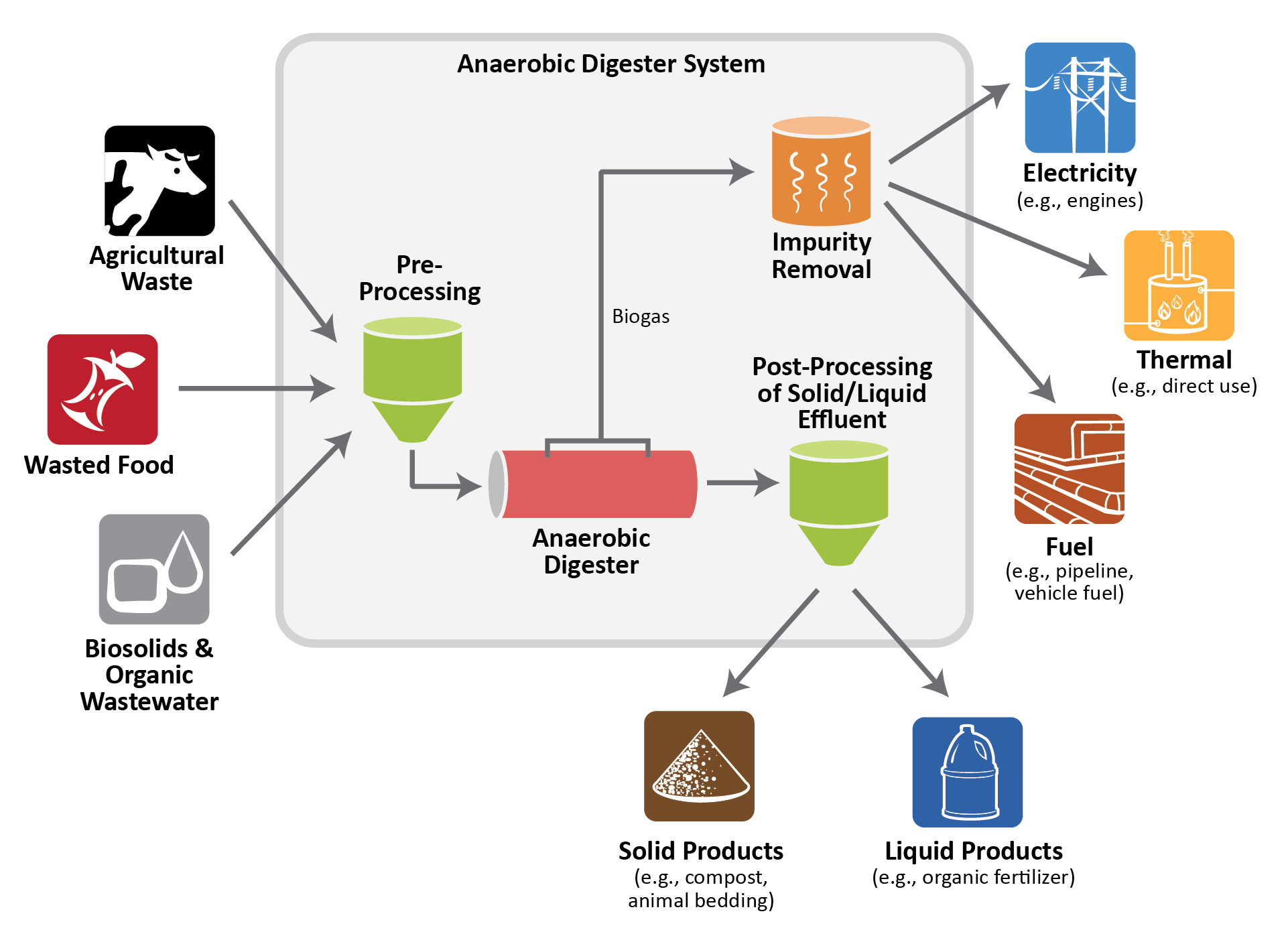
Image from Tn.gov
While utilizing RNG as an electrical source isn’t new, pairing it with data centers to meet their power demands is more of a recent development. Supporters of this partnership point to the fact that both facilities share a common ingredient: heat. The continuous operation of computers in data centers creates excess heat, which is something an anaerobic digestion plant (the technical term for a RNG facility) needs in order to speed up the decomposition of manure. There is potential for a data center’s heat to be transferred to an anaerobic digestion plant via a heat exchanger, which uses water to absorb and transport heat. In a data center, this would mean pulling the facility’s hot air into a radiator that has cool water flowing on one side of it. This water would absorb the heat and be transported to a digestion plant, where it could be used for the anaerobic digestion process.
Despite these complementary processes, there is real fear from critics about the negative consequences of data centers getting involved in the manure-to-energy industry. The most obvious fear being that this new partnership could in turn incentivize the further proliferation of factory farms (to create enough RNG, you really do need thousands of cows). As the location of data centers shift to rural areas, there could be a future scenario where farmers pivot their operations away from crop production towards more livestock as a way to cash in on this new opportunity. In a situation like this where manure becomes more valuable than food, it creates incentives for farmers to increase their herd sizes so that they can generate more manure and thus more energy.
But at the end of the day, can RNG really be considered a sustainable energy source for data centers if it leads to an increase in animal agriculture (one of the leading drivers of climate change)? The answer is not really. To add to this, a scientific review evaluating the pros and cons of anaerobic digestion found that while digesters can reduce methane emissions in the short term, they may also lead to an increase in ammonia emissions, toxic by-products, and other pollutants released into the environment, a phenomenon referred to as “pollution swapping”.
Conclusion
At its core, the rapid expansion of the AI industry and its infiltration into our daily lives begs the question: who does this technology really serve, and at what cost? It’s a loaded question that probably deserves its own dedicated post, but one thing is clear: digital progress is being built on physical extraction. Converting farmland into data centers isn’t a sustainable path forward. Nor is a manure-to-energy system that risks deepening our reliance on industrial animal agriculture. It’s important to remind ourselves that tech expansion, no matter how innovative, cannot come at any cost. We need safeguards that protect the land, the people, and the natural resources that we rely upon.
