Farming the Waters
An introduction to aquaculture, its major risks, and opportunities for the future
by Caya van der Sluis and Laurie Sellars
Credits: Lilly Agustina / We Animals
Faced with a growing global population, various actors are exploring how to create and maintain a sustainable and healthy food system. With most fisheries maximally or over-exploited and the environmental challenges of terrestrial animal agriculture—such as greenhouse gas emissions and intensive land and freshwater use—scholars, international agencies, and national governments increasingly promote animal aquaculture, or aquatic animal farming, as a sustainable alternative. Advocates view animal aquaculture as essential to food security, and more environmentally friendly than farming land animals by producing fewer greenhouse gas emissions and requiring less land and freshwater. The sector’s recent growth reflects this enthusiasm: according to the United Nations Food and Agriculture Organization (FAO), aquaculture’s production of animals has exceeded that of capture fisheries since 2021 and is predicted to continue to grow.
Despite this enthusiasm and the industry’s claimed benefits, animal aquaculture is not a silver bullet that will resolve the challenges within our food system; it in fact raises a range of issues spanning farmed animal welfare, environmental and wildlife protection, and human rights, health, and equity. We’re two researchers studying these challenges and exploring ways to address them. In this article, we want to introduce you to this often-neglected sector, its vastness and diversity, its major risks, and opportunities to address its potential harms.
What is aquaculture?
Most simply, aquaculture is “the farming of aquatic organisms.” These organisms span fishes (such as carp or salmon), amphibians (such as the American bullfrog), reptiles (such as the Chinese softshell turtle), mollusks (such as oysters), crustaceans (such as shrimp or crawfish), other aquatic invertebrates (such as sea cucumbers), and aquatic plants (such as seaweeds). Farming can take place in natural aquatic environments (like oceans and lakes) or in manmade settings (like artificial ponds or fully-controlled indoor tanks) and can utilize freshwater, saltwater, or brackish water. Asia is the top-producing region, accounting for 92% of all aquaculture production globally and 89% of global animal aquaculture production in 2024. China is by far the top aquaculture country, producing 56% of farmed aquatic animals in 2024. Even so, animal aquaculture is a global industry: the top 10 animal aquaculture producers span Asia, Europe, Africa, and South America. Norway, for example, is the leading producer of farmed Atlantic Salmon, and Ecuador is the second-largest producer of farmed shrimp.
Despite this relative concentration, aquaculture is extremely heterogeneous and produces a dizzying array of animal species. According to the FAO, the world has farmed or attempted to farm 530 different aquatic animal species between 1950 and 2022. With some exceptions, most of these farming attempts occurred only in the last 70 years (see Fig. X). In contrast, nine species represent almost all farmed species in global land animal agriculture, and humans began farming these species thousands of years ago.
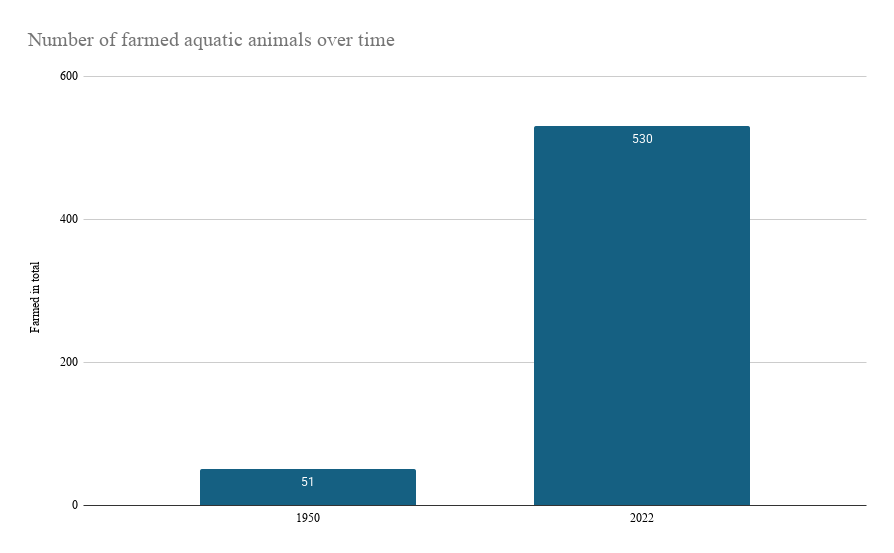
Fig. 1. Since 1950, the number of aquatic animal species that humans have farmed or attempted to farm has increased more than ten-fold. Figure based on FAO data (2024).
These animals are grown in a range of production systems, from human-made freshwater ponds to open-net pens (sea cages in the ocean) to fully-controlled indoor facilities. The images below show examples of some of these systems. In the next section, we describe some of the risks these various modes of aquaculture pose to the animals they farm.
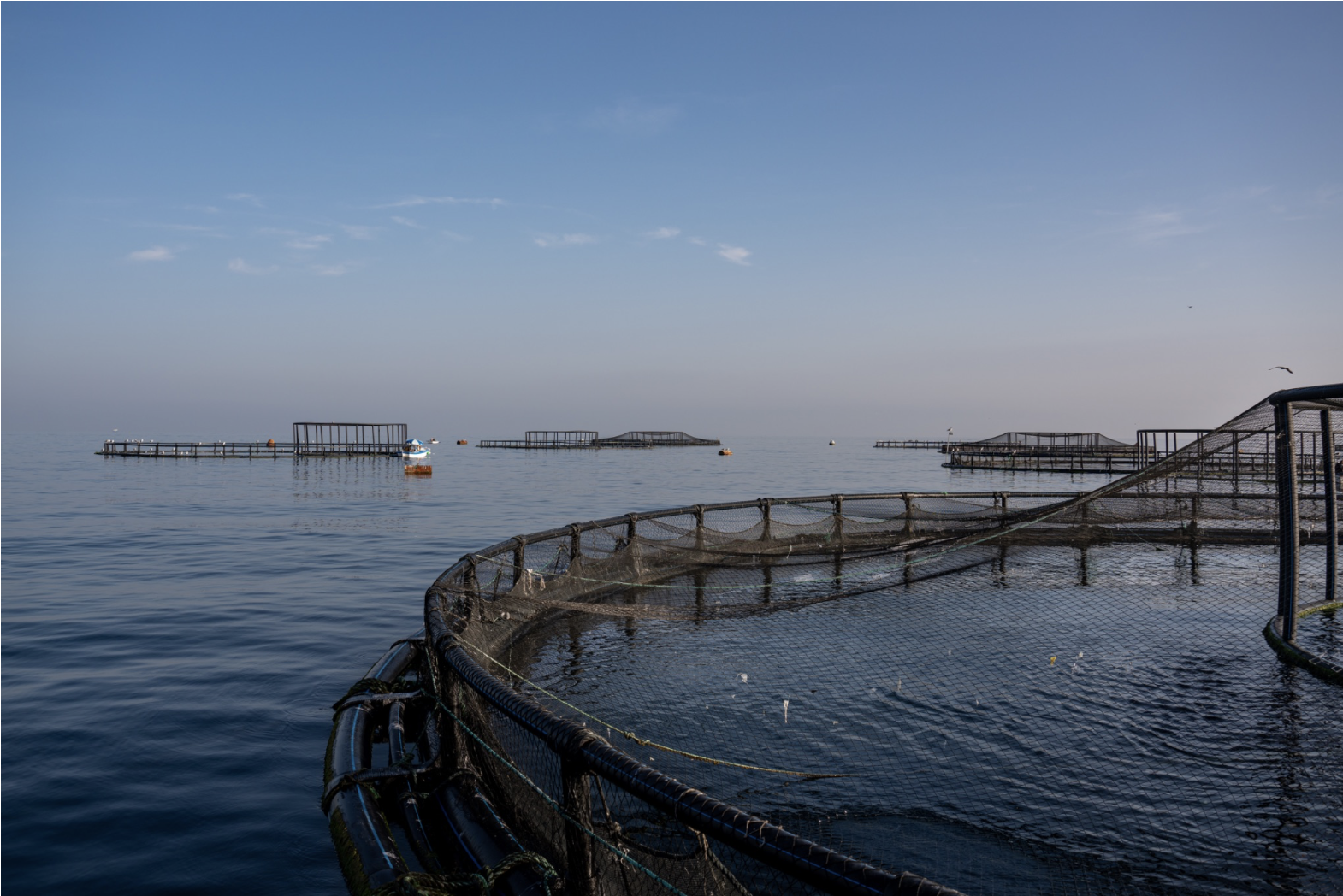
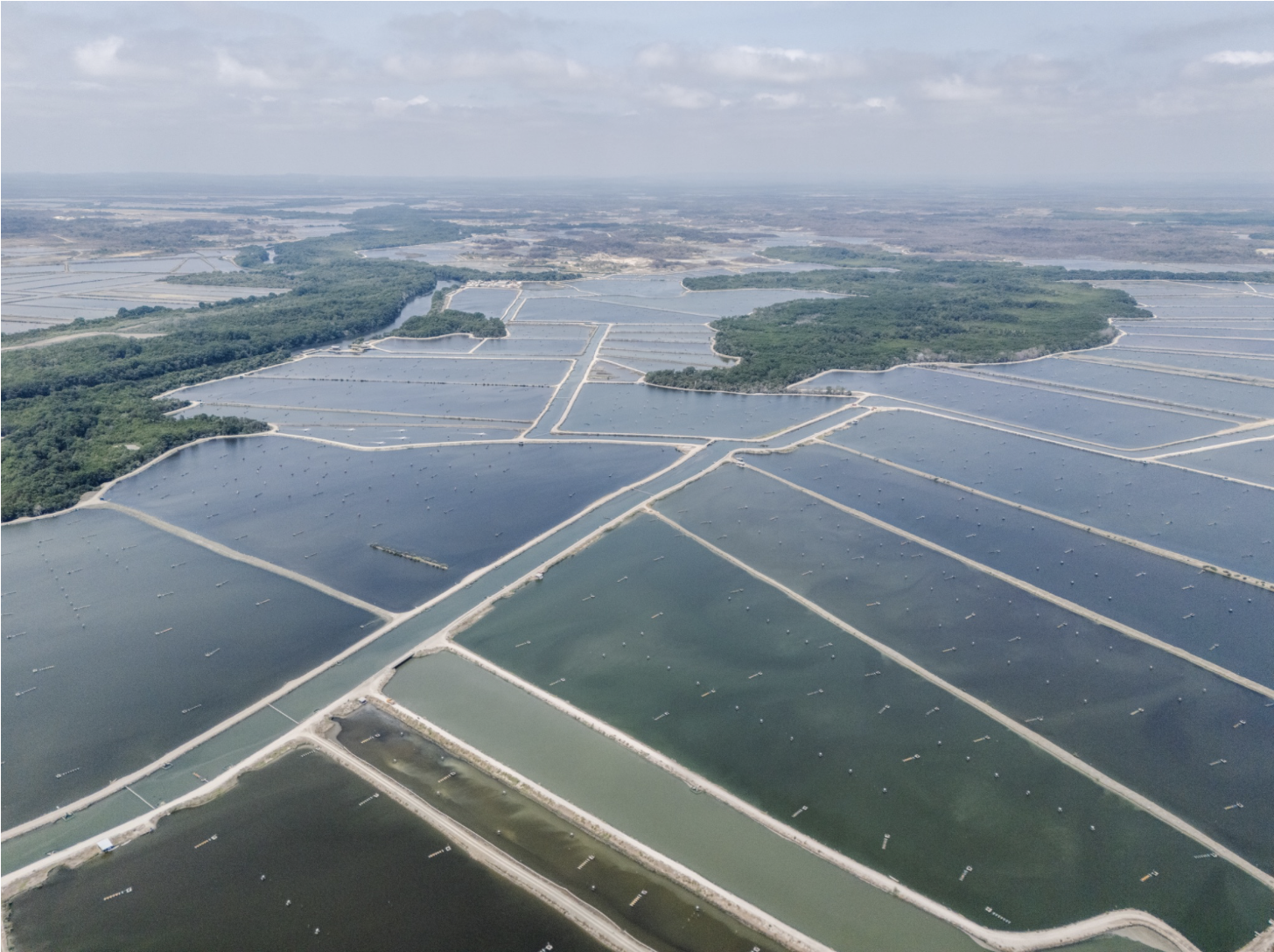
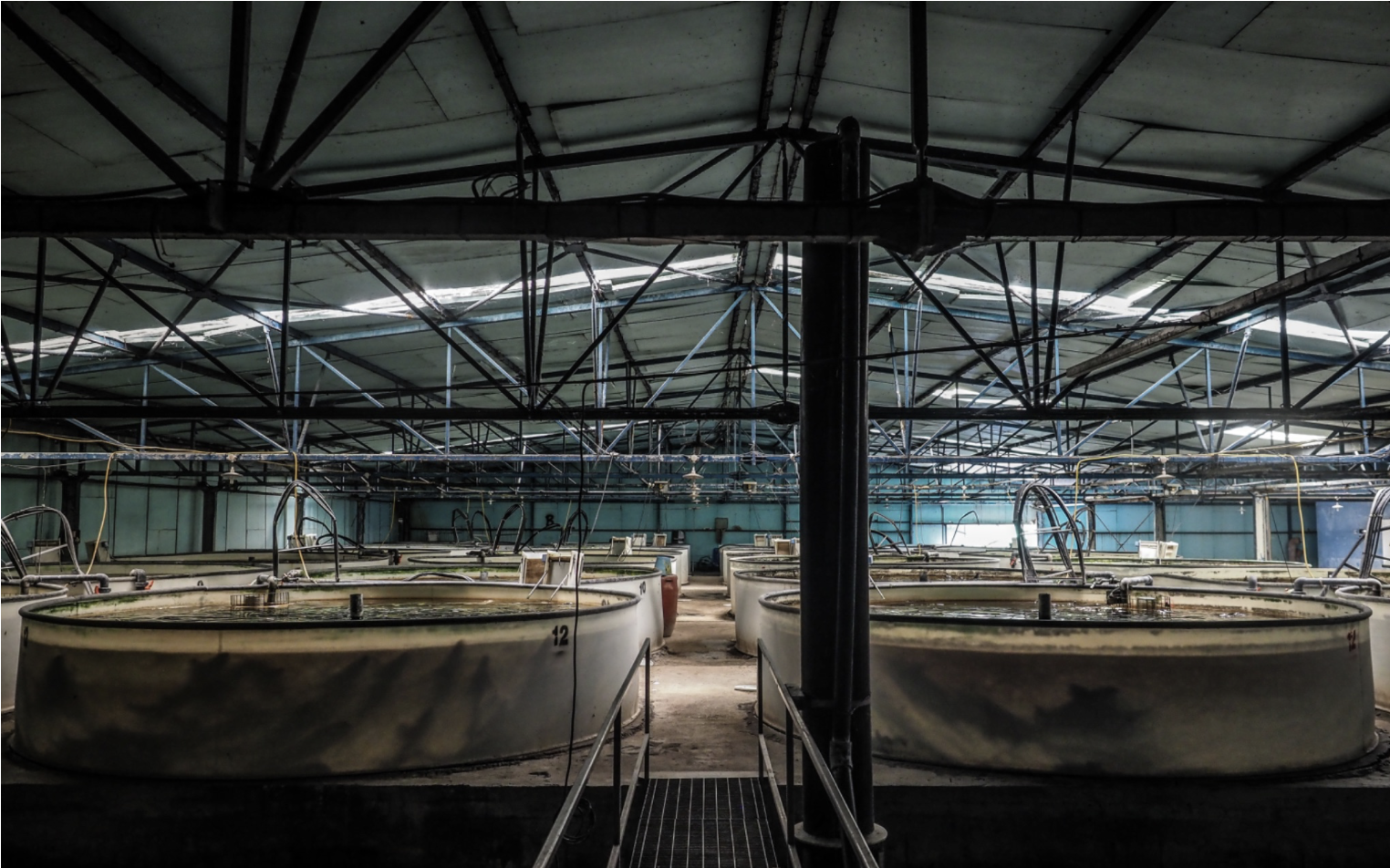
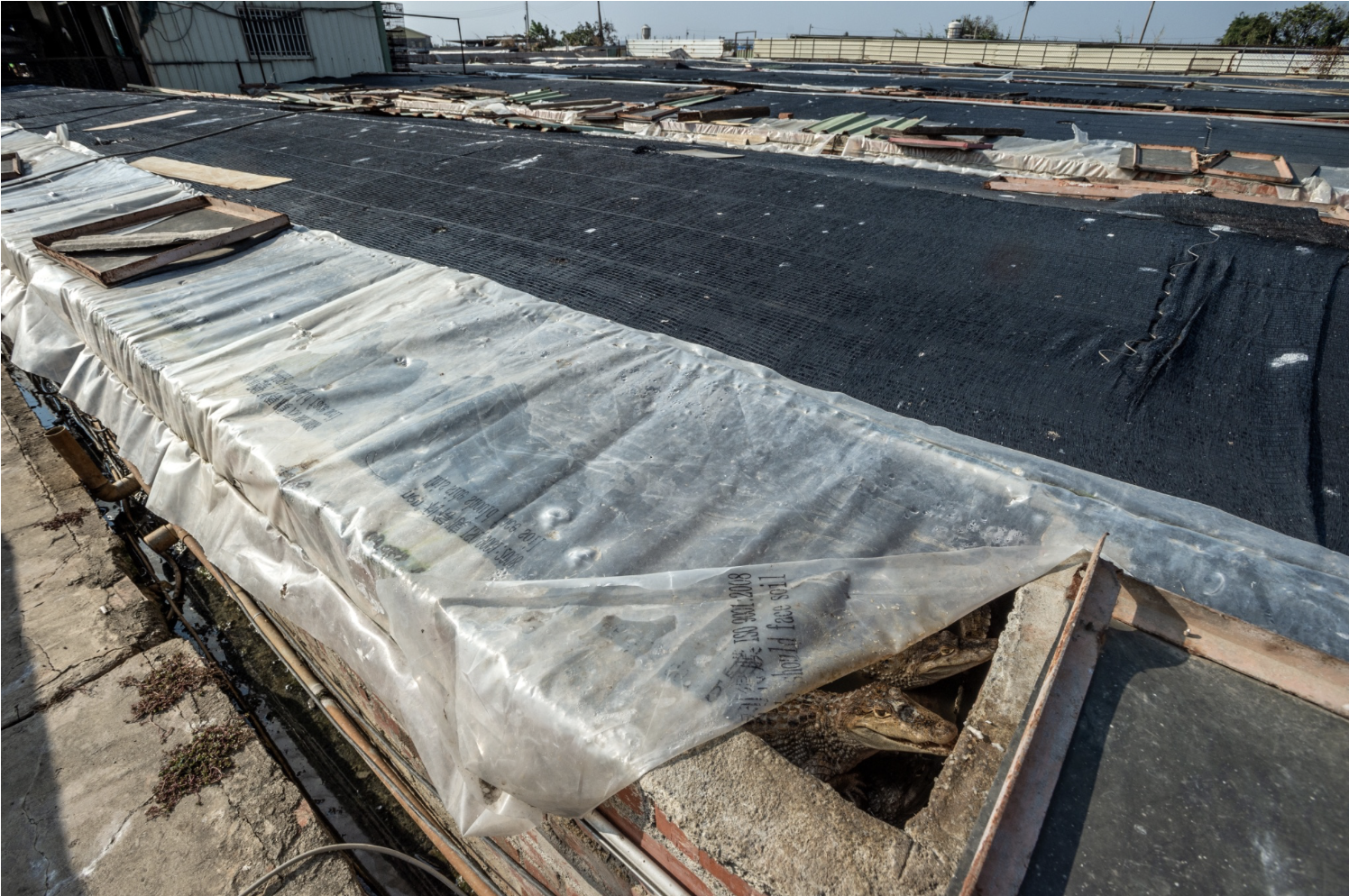
Image 1: Floating cages on a fish farm in Turkiye containing either sea bass or salmon. The cages are covered with netting to prevent birds from eating the fishes inside. Photo by Havva Zorly / We Animals.
Image 2: Aerial view of large shrimp farm ponds within an Ecuadorian mangrove ecosystem. Water aerators sit scattered throughout most of the ponds. Photo by Marcos Zegers / We Animals.
Image 3: An indoor sturgeon farm in Greece. The sturgeon are housed in tanks and farmed for their eggs to produce caviar. Photo by Selene Magnolia Gatti / We Animals.
Image 4: On this farm, alligators raised for meat are kept in tightly packed concrete enclosures with water at the bottom and tarps stretched over the top to trap heat inside. Throughout the world, alligators are farmed for their meat and skin. Undisclosed location. Photo by Jo-Anne McArthur / We Animals.
Farmed animal welfare
Current levels and modes of aquaculture production already pose unprecedented risks to farmed animals. Animals in these systems often live in highly artificial environments, in much larger numbers and smaller spaces than they would occupy in the wild. Farmed Atlantic salmon, for example, can live with 200,000 individuals in cages approximately 60 meters (~200 ft) wide and 50 meters (~165 ft) deep. This confinement creates a host of welfare risks, including inability to engage in natural behaviors like hunting or migrating and intensified exposure to disease and parasites. For example, the unnaturally high densities at which farmed Atlantic salmon are kept give sea lice—tiny parasitic crustaceans who attach to hosts and eat their mucus, blood, and skin—a much easier time finding a host, surviving, and reproducing. As a result, farmed salmon can become so covered in sea lice that they are effectively eaten alive. In addition to farm conditions, husbandry practices can injure and mutilate farmed animals. For instance, eyestalk ablation—cutting, burning, or tying off one or both eyestalks—is a common practice in shrimp farming to manipulate female shrimps’ hormones and induce spawning. Beyond the farm, capture and transport processes stress animals, and slaughter methods such as asphyxiation on ice, maceration, or bleeding—often done without first stunning the animals—may cause extreme pain and distress.
The vast diversity of animal species in aquaculture exacerbates these welfare risks. Animals’ welfare needs vary greatly depending on species, yet most species lack scientific welfare literature about their specific needs. Despite growing evidence of aquatic animals’ cognitive and emotional complexity, this literature remains sparse. The continued, rapid expansion of species diversity only widens this gap, outpacing the research needed to understand and safeguard the welfare of each farmed species.
This lack of scientific knowledge is compounded by a tendency to ignore the individuality of aquatic animals altogether. In both fisheries and aquaculture, nations and international agencies report production data in terms of the weight of animals produced rather than the number of individuals, as is common in land animal farming. Some researchers have estimated the number of farmed individuals in aquaculture using animals’ slaughter weights, demonstrating the already unprecedented scale of aquatic animal production: in 2022, for example, the world slaughtered an estimated 763 billion finfishes and crustaceans alone, excluding amphibians, reptiles, mollusks, and invertebrates besides crustaceans. (In contrast, the world slaughtered approximately 85 billion farmed land animals that same year.) In addition, this estimate only includes animals who survived long enough to be slaughtered. To illustrate, the estimated mortality rate for salmon on Norwegian farms before reaching slaughter was over 16% in 2024. Lack of consideration for farmed aquatic animals is further compounded by—and reflected in—the relative lack of legal protections for these animals’ welfare around the world.
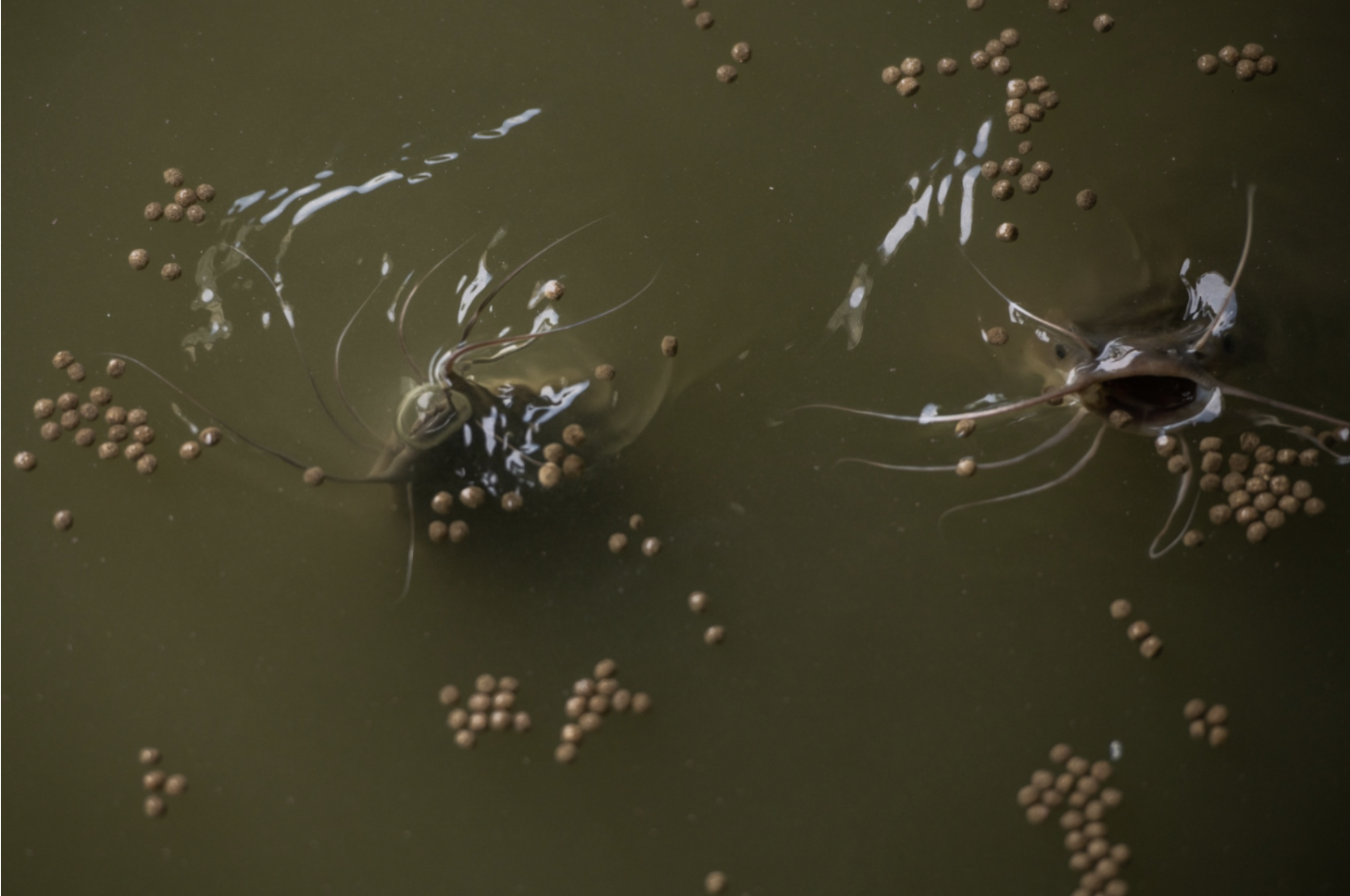
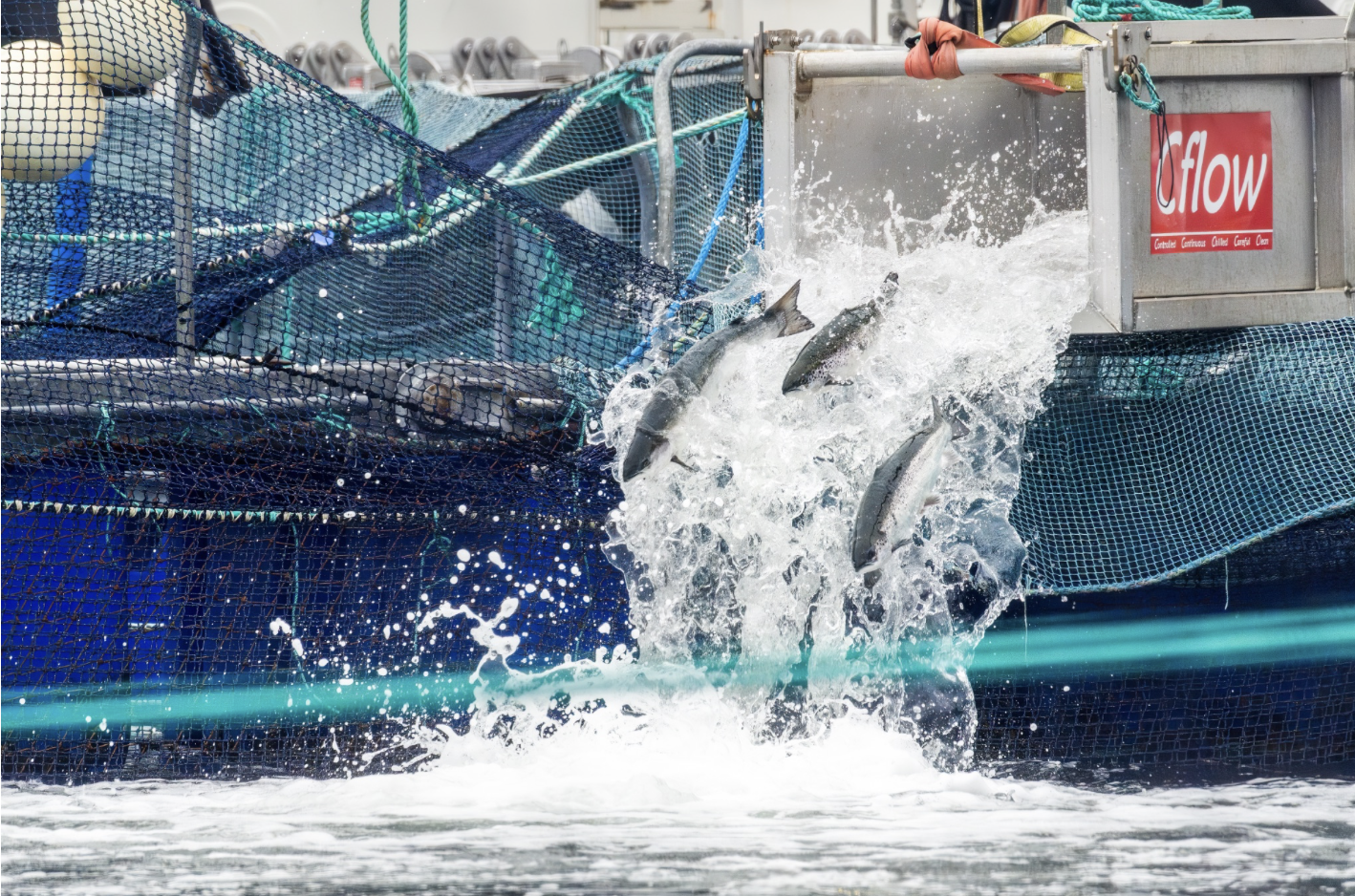
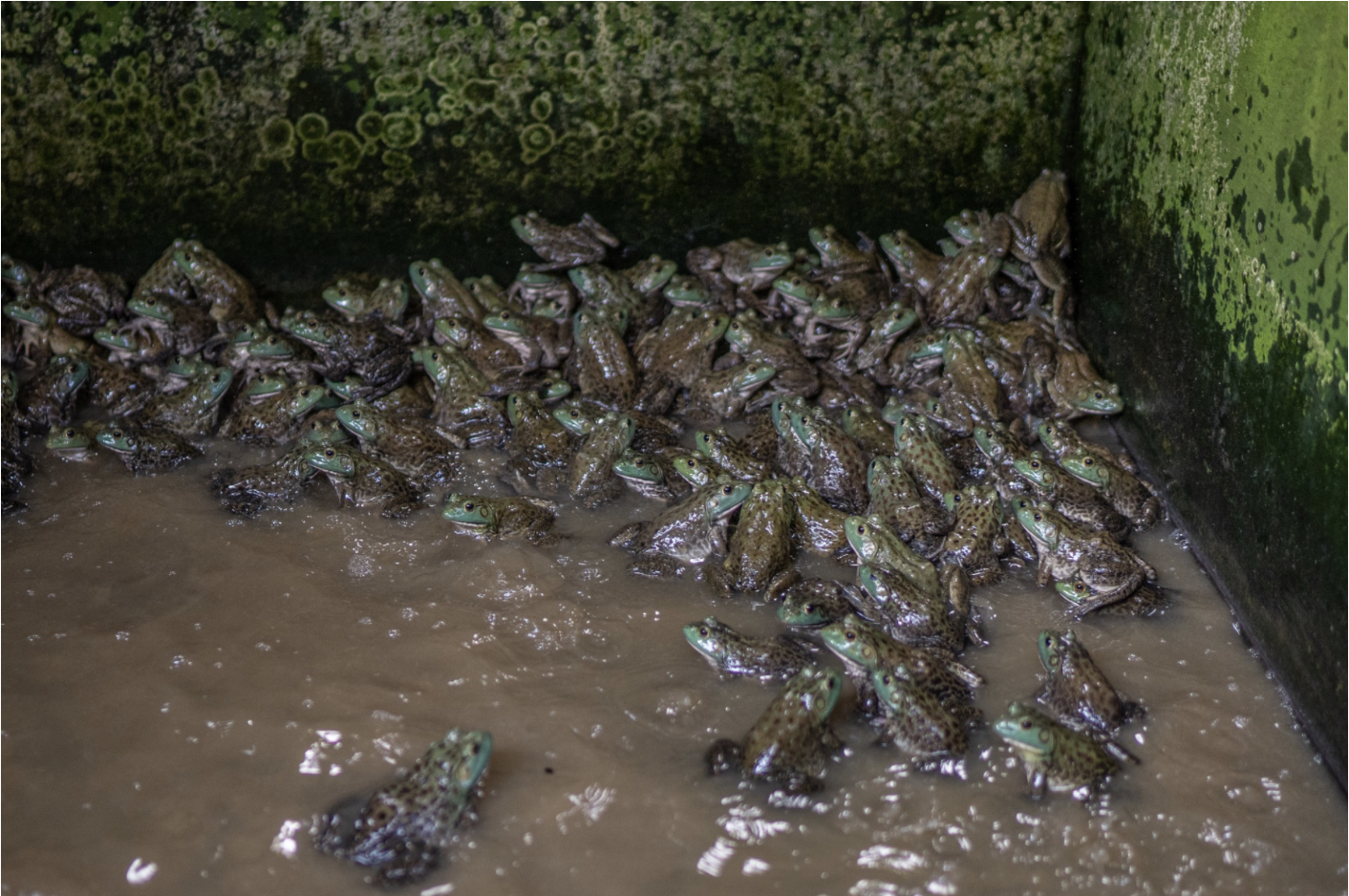
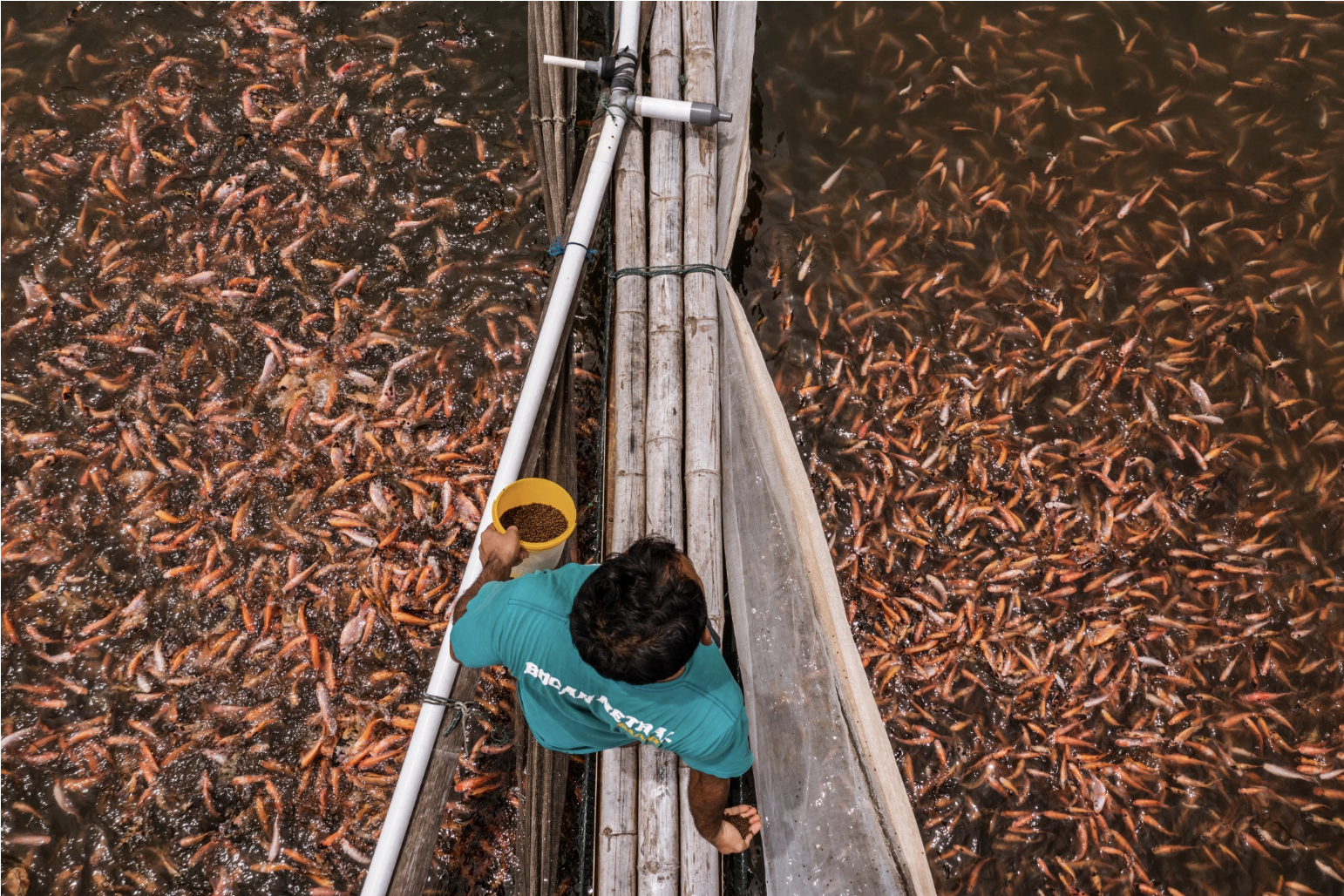
Image 1: Catfish on a farm in Thailand eat floating food pellets at the water’s surface. In the wild, catfish eat a varied diet of insects, algae, aquatic plants, and small fish, and they prefer to find their food near the bottom of the water body they live in. Photo by Mako Kurokawa / We Animals.
Image 2: Atlantic salmon are discharged from a vessel into a sea cage after being treated for sea lice at a farm in Canada. These salmon were treated with high-pressure water to wash the lice from the fish, a process called “hydrolicing.” Another method for treating salmon for sea lice is thermal delousing, where salmon are led through warm water to force the sea lice to detach. To the salmon, this process feels as if they were being boiled alive. As a result, this method comes with high levels of salmon mortality. Photo by Jeremy Mathieu / We Animals.
Image 3: These bullfrogs on a farm in Indonesia are housed with hundreds of others in barren, concrete enclosures filled with murky brown water. Bullfrogs used for breeding are kept in a separate enclosure. Photo by Seb Alex / We Animals.
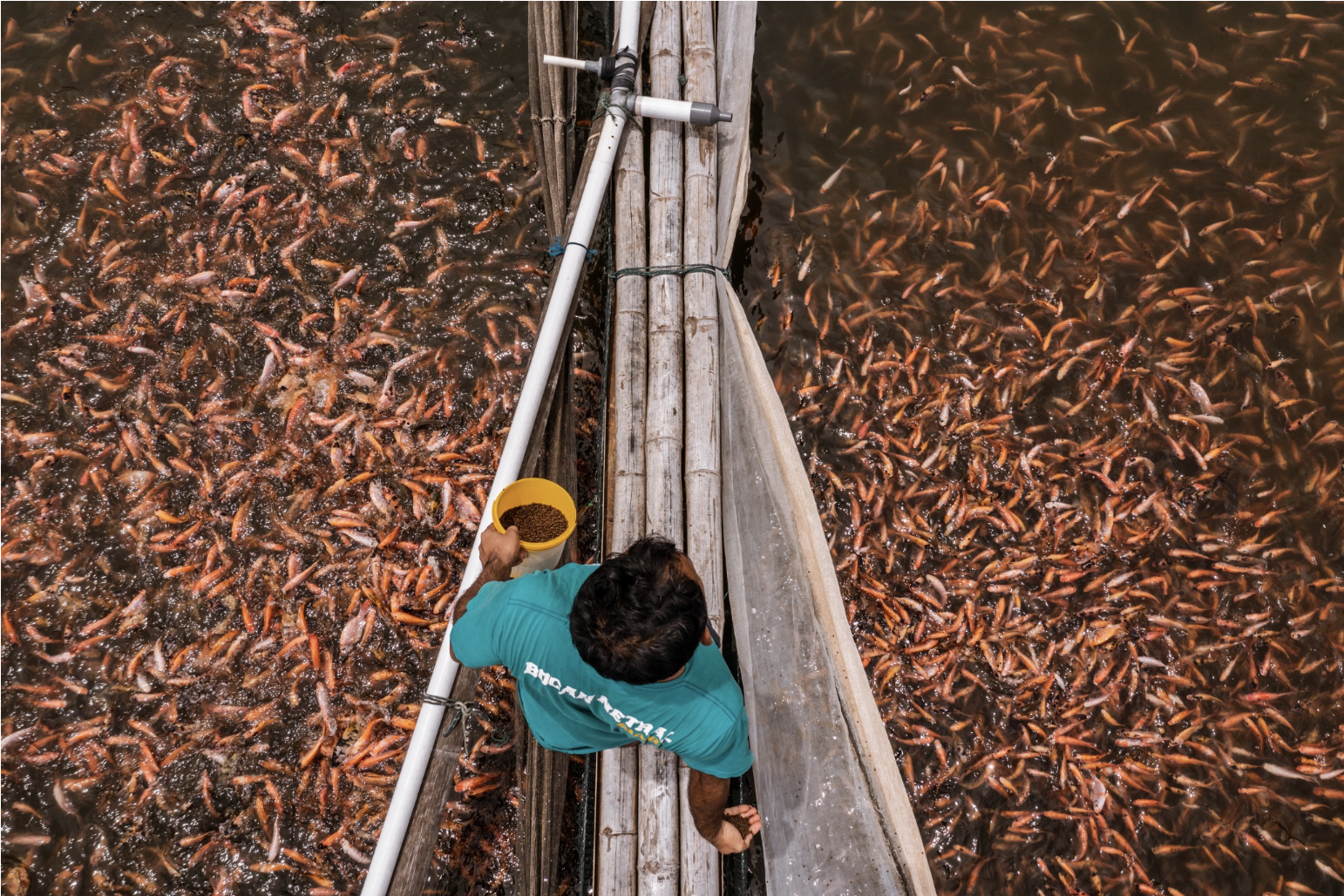
Image 4: Aerial view of a man holding a bucket of fish food pellets while walking between two floating cages containing thousands of juvenile tilapia at an Indonesian farm. The fishes crowd together at the surface of their 4 by 4 m (~13 by 13 ft) enclosures. To reduce costs, the fish are fed organic restaurant waste in addition to the pellets. Photo by Lilly Agustina / We Animals
The environment and wildlife
Depending on the farmed species and production system, aquaculture also poses a variety of risks to the environment and wildlife. One such risk is pollution. For example, ocean-based Atlantic salmon farming places cages directly in the marine ecosystem. As a result, ocean water flows through the cages and takes fishes’ feces, uneaten feed, pathogens, and antibiotics with it, polluting surrounding waters and sediments and altering local biodiversity. Similarly, farming grass carp in freshwater ponds contributes to water acidification and pollution by emptying pond water—and residual uneaten feed and feces—into surrounding water systems. This influx of excess nutrients can cause eutrophication—increased growth and decomposition of plants and algae, which leads to depleted oxygen levels in the water—and reduce local wildlife populations.
Aquaculture affects wild animals in ways beyond pollution as well, including through increased fishing pressure on wild fish populations. Some aquaculture species, such as Atlantic salmon, are carnivorous, and farms feed them other fishes in the form of fish meal or fish oil. Reduction fisheries catch small fishes, like anchoveta or sardines, from the wild to be reduced to fish meal and fish oil. Depending on the year, reduction fisheries can account for one-sixth to one-third of the total catch of marine fisheries globally, reflecting the intensified fishing pressure aquaculture places on these species to feed farmed animals.
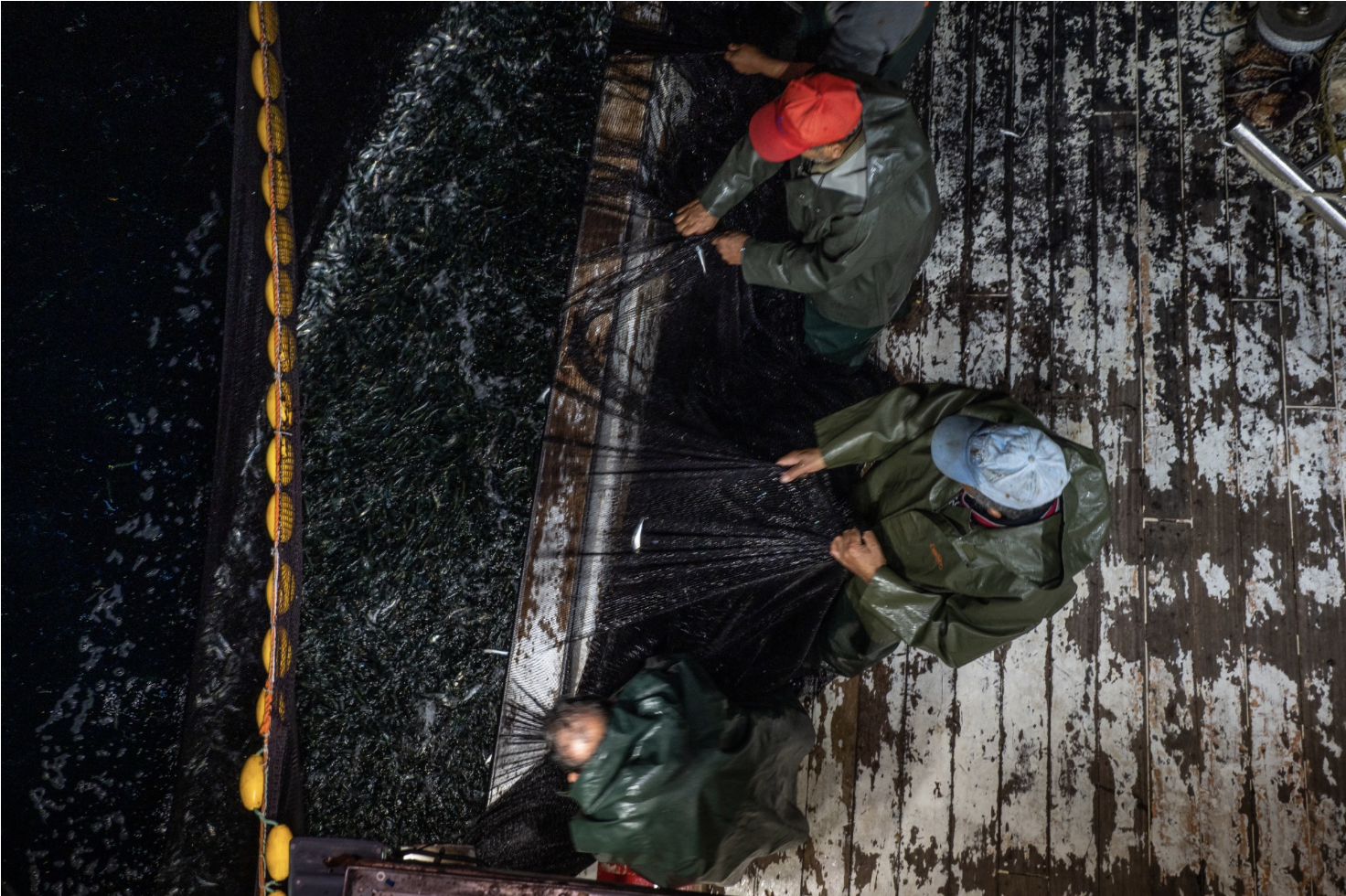
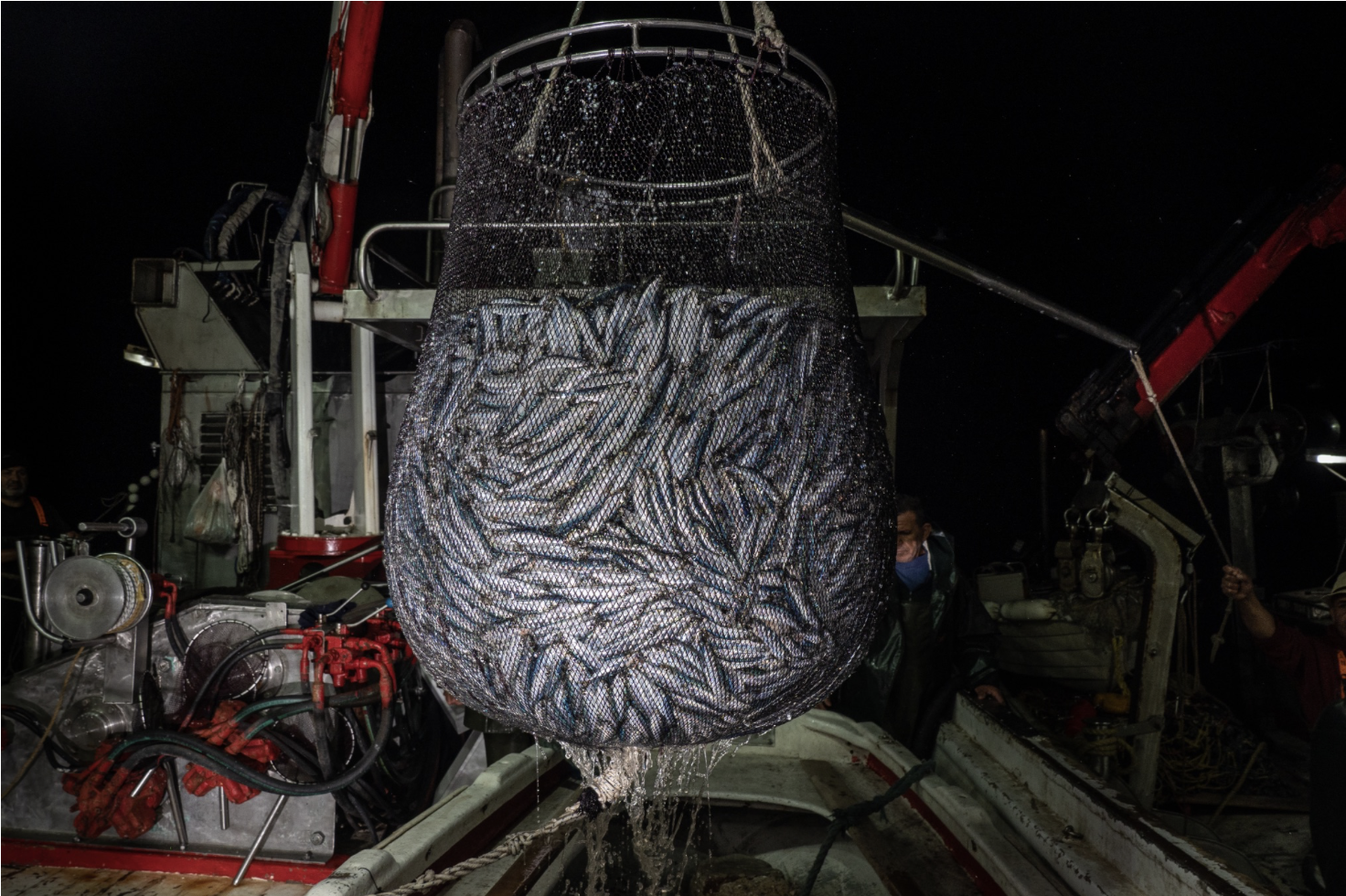
A large net containing sardines is hauled aboard a fishing boat in Greece. The sardines are packed on top of each other, and the weight of the fishes above them causes stress, pain, and injuries. For fishes, being out of the water causes asphyxiation—effectively drowning in air—which is stressful and painful. Sardines are often used to produce fish oil or fish meal to feed farmed aquatic animals like Atlantic salmon. Photos by Selene Magnolia Gatti / We Animals.
Additionally, when farms are placed directly in ecosystems, severe weather conditions, predators, and abrasion can damage infrastructure, allowing farmed animals to escape into the wild. Escapes can create opportunities for farmed animals to interbreed with their wild counterparts, compete with them for resources, and spread diseases and parasites, all of which can threaten wild populations. Large-scale fish escapes from aquaculture have happened around the world and ranged from more than 70,000 escaped individuals to as many as four million.
Human considerations
Animal aquaculture is also associated with risks to human workers, public health, and global equity. Most workers in the aquaculture sector belong to vulnerable populations, including indigenous people, seasonal and migrant workers, and women. In general, child labor and slavery are widespread throughout the seafood supply chain, including in aquaculture. The aquaculture industry also exposes workers to a wide range of occupational hazards, such as drowning, asphyxiation, injuries, zoonotic infections, respiratory diseases, and more. The risks are higher in ocean-based farming and their severity varies widely between countries. Regrettably, the human and social costs of aquaculture receive far less attention than some of its other risks. Aquaculture workers remain largely out of sight and out of the conversation.
Beyond people directly involved in production, aquaculture also poses potential risks to public health. Through bioaccumulation, pollutants and heavy metals have been found in aquaculture products. In addition, widespread, preventative application of antibiotics and other antimicrobials on farms creates ideal conditions for the emergence of antimicrobial resistance. Such resistance is already considered an urgent threat to public health and is estimated to have directly killed at least 1.27 million people in 2019 alone.
Although aquaculture is promoted as a positive contribution to food security, this is not universally true. As described above, some fish species are caught from the wild to feed farmed animals; many of these wild fishes are suitable for direct human consumption and relied upon in many regions for both food and financial security. However, because of the growth of aquaculture, these affordable fishes are removed from food-insecure areas and used to produce luxury products, such as Atlantic salmon, destined for wealthy nations. As a result, animal aquaculture may make some regions less—not more—food secure.
Opportunities for the future of aquaculture
Given animal aquaculture’s challenges, it’s worth exploring what a different path might look like. Aquaculture has only been industrialized since the 1970s—roughly five decades—meaning that most forms of aquaculture are not yet culturally, socially, or economically embedded in the ways terrestrial animal farming is. We collectively have a unique opportunity to reconsider and shape its trajectory. Here, we briefly describe two potentially positive directions for the sector.
First, efforts to pursue aquaculture could be directed toward non-animal modes of production—in other words, plant-based aquaculture. This form of aquaculture avoids harms to farmed animals and can have positive effects on the environment through sequestering carbon, protecting coastal areas, and redressing eutrophication. Algae farming is extremely diverse, ranging from spirulina to nori or kelp. Some seaweeds have high protein content and can contribute to food security, while other species are grown for non-food products such as bioplastics or fertilizer. Aquatic plant farming has already proven to be an economic alternative to struggling fishing communities. In Alaska, for example, seaweed farming offers more stable, year-round income than fishing does, while allowing the use of existing equipment. With increased investment and research, seaweed farming could similarly offer an alternative to farming aquatic animals while creating ecological and financial benefits.
Second, the sector could exercise more caution regarding—or adopt a moratorium on—introducing new animal species to production. As discussed above, the rapid expansion of the number of species in aquaculture creates welfare risks and exacerbates already vast welfare knowledge gaps. To safeguard animal welfare, pre-emptive bans on commercially farming species that are not yet farmed could prevent these harms from materializing in the future. Such efforts have already been implemented in some cases: for example, commercial octopus farming does not yet exist in the United States, but multiple states have pre-emptively banned the practice. Similar legislation is being considered in additional states and at the federal level.
Concluding remarks
Animal aquaculture is already unprecedented in its rate of development and the number of farmed species and individual animals, and this growth is only predicted to continue. While aquaculture's rapid expansion poses unique risks, it also presents unique opportunities to shape the future of aquatic foods. With the collective effort of consumers, advocates, researchers, and policymakers, this industry can shift into something more just, healthy, and sustainable for all stakeholders—humans, animals, and ecosystems alike.
Want to dive deeper?
What a Fish Knows by Jonathan Balcombe: A fascinating book that will teach you about the incredible diversity of fishes, their capabilities, and their social and cultural lives. (Spoiler: the term “fish” is actually quite inaccurate).
The New Fish by Simen Sætre & Kjetil Østli: This book specifically addresses salmon farming in Norway. Through its chapters, however, it touches on many of the problems in the aquaculture sector as a whole, such as the impact on individual animals, diseases, and the economic incentives that steer aquaculture legislation and perception.
Fishcount: This website is dedicated to translating fisheries and aquaculture production weight data to the number of slaughtered individuals. They offer overall global numbers, but you can also sort by species or country.
Fair-fish Database: This website offers a collection of “science-based welfare information” for species used in aquaculture and wild-caught fisheries. You can search for information by species or by farming or capture method.
We Animals advocates for animals through photojournalism. Their stock website offers tens of thousands of photos and videos exposing humans’ complex relationships with other animals. On their home page, there is a direct link to aquaculture photos, and you can search by species, country, or production method. Trigger warning: many of the photos show suffering and exploited animals.
Caya van der Sluis is a researcher at New York University’s Department of Environmental Studies and the Center for Environmental and Animal Protection. With an MSc in Agroecology and an MA in Animal Studies, her research focuses on animals in the food system. Her current work examines the environmental, social, and animal welfare issues in aquaculture and proposes policy solutions to address them.
Laurie Sellars is an Environmental Studies PhD student at New York University. Her research examines humans’ relationships with and exploitation of the oceans and aquatic animals, with a focus on the dewilding risks of industrial aquaculture and wildlife tourism. Prior to NYU, she was the Postgraduate Fellow with the Law, Environment & Animals Program at Yale Law School, where she was also an Associate Research Scholar.
